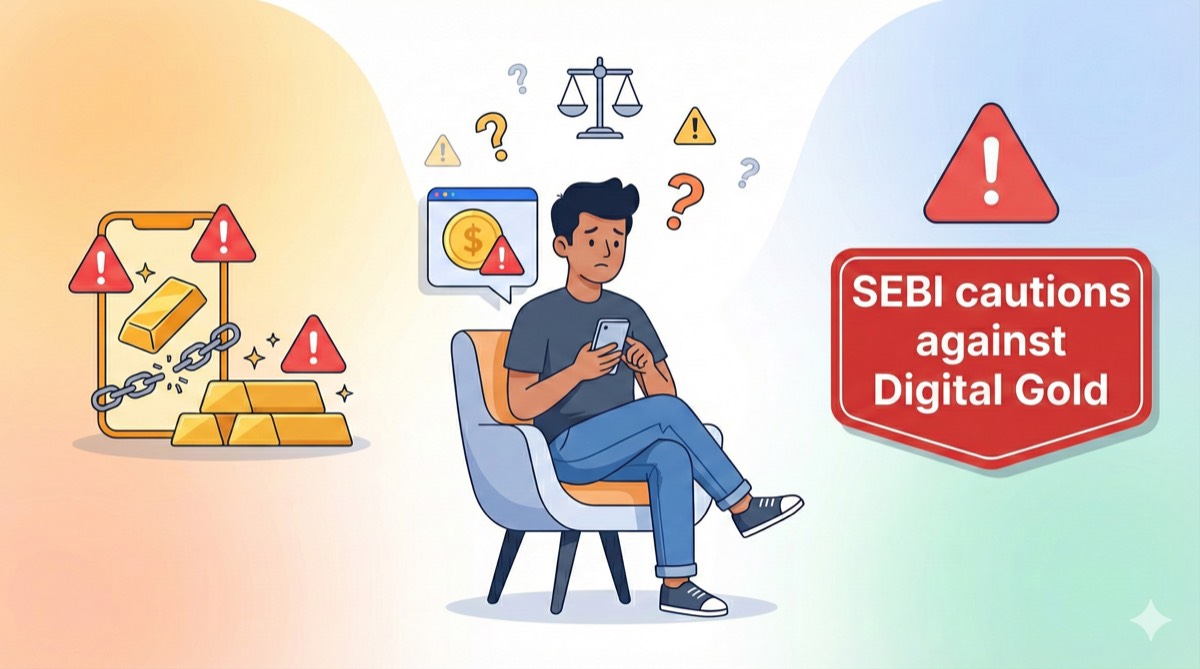
The SEBI Warning You Need to Know About
Digital gold is NOT a SEBI-registered product. SEBI (India's stock market regulator) issued a public notice (PR No. 70/2025, Nov 8, 2025) warning that digital gold operates entirely outside SEBI's regulatory umbrella—meaning no investor protections, no mandatory audits, and no grievance redressal.
If you've been tapping on PhonePe, Paytm, or Google Pay to buy a quick gram of gold, you're not alone—millions of Indians have jumped on the digital gold bandwagon. But before you treat it like real gold, you need to understand what you're actually buying.
SEBI explicitly stated: "Products offered by companies such as PhonePe, Paytm, and Google Pay are not regulated under its framework." This means if something goes wrong, you're on your own.
What Did SEBI Actually Say?
Digital gold is classified as neither a security nor a commodity derivative. It operates in a regulatory grey area with no formal disclosures, no guaranteed grievance redressal, and no oversight of how your gold is actually held.
Key Points from SEBI's Warning:
- Not a Registered Security: Digital gold products are not classified as securities or regulated commodity derivatives. No SEBI audits, no mandated vault inspections.
- No Vault Inspections: Regulators cannot inspect fintech platforms' physical vaults to verify the presence and purity of gold. You're relying entirely on the company's word.
- No Consumer Protections: None of the usual investor safeguards apply. No SEBI grievance cell, no mandatory audit trail, and no compensation fund if things go wrong.
- Aggressive Marketing: Apps bombard you with notifications to buy gold with just a click—but convenience doesn't equal safety.
"None of the investor protection mechanisms under the securities market shall be available for digital gold investments." — SEBI Public Notice, November 2025
The Hidden Risks of Digital Gold
Digital gold carries significant counterparty, operational, and liquidity risks that most investors don't realize until it's too late.
1. Counterparty Risk
If the company or platform you bought digital gold from defaults or shuts down, you have no regulator to protect you. Imagine your digital gold is like a "gold coupon" held by the app. If the app goes bust, the coupon could be worthless.
2. Operational Risk
Issues like purity verification, storage conditions, insurance coverage, or delivery logistics can trip you up. Some platforms require minimum amounts for delivery; smaller investors end up paying hefty fees to actually get real gold.
3. Hidden Costs
Besides the 3% GST, most platforms tack on a 2-3% distribution/insurance fee into their price. This means digital gold often costs 5-6% more than spot gold, whereas regulated Gold ETFs charge only 0.5-0.8% per year.
4. No Redemption Guarantee
Unlike holding a physical gold coin, you don't actually hold digital gold. You have a record of ownership with the app, but getting actual gold delivered can be slow, costly, or impossible if the firm struggles. There's no standardized escrow or trustee in place.
Digital Gold vs Gold ETFs vs Mutual Funds
Here's how digital gold stacks up against SEBI-regulated alternatives. The difference in regulatory protection and costs is significant.
| Feature | Digital Gold | Gold ETFs | Mutual Funds (NiveshPe) |
|---|---|---|---|
| Regulation | None. Unregulated | SEBI-regulated | SEBI & AMFI regulated |
| Underlying Asset | Contractual claim on vendor's gold | Units of fund holding physical gold bullion | Diversified securities portfolio |
| Ownership | Ledger entry with vendor | Demat units representing gold | Fund units; trustee holds assets |
| Annual Cost | 5-6% (GST + platform fees) | 0.5-0.8% expense ratio | 1-2% expense ratio |
| Liquidity | Medium (delays possible) | High (exchange traded) | High (redeem any business day) |
| Counterparty Risk | High - No protection | Low - Custodian banks | Low - Multiple safeguards |
| Investor Protections | None | SEBI mandated disclosures & audits | Full SEBI/AMFI protections |
| Best For | Short-term micro-savings (if you know risks) | Core gold exposure for long-term | Long-term wealth goals, diversified portfolios |
Understanding the Risk in Simple Terms
Think of digital gold like a gift card vs. actual gold. With a gift card, you trust the store won't go bankrupt before you use it. With physical gold, you hold the coin. Digital gold is closer to that gift card scenario.
Example: Imagine you send ₹1,000 via a friend to buy a gold coin. If the friend keeps the coin and promises to give it later, but then vanishes, you just lost ₹1,000. Digital gold has the same risk—no guaranteed vault-insurance or regulatory body to recover your gold.
Operational Glitch Scenario: Suppose the app promised 10 grams of 24K gold in your name. You pay ₹10,000—but due to a software glitch or bad vault inventory, maybe only 9 grams exist. Without an independent audit, you wouldn't know until you try to redeem it.
"There is no regulator auditing the inventory of physical gold and its purity" — a scary thought if you like to double-check your investments.
Why Mutual Funds Are a Safer Choice
Mutual funds offer professional management, regulatory protection, and diversification—everything digital gold lacks. Here's why they're better for long-term wealth building.
Key Advantages of Mutual Funds:
- SEBI-Regulated: Full disclosures, third-party custodians for assets, and periodic audits. If something goes wrong, SEBI/AMFI has grievance redressal mechanisms.
- Diversification: A mutual fund basket spreads your money across dozens of stocks and bonds, reducing risk compared to putting all eggs in one basket (or one gold vault).
- Easy SIP Investing: Start with as little as ₹100-500 monthly. No demat account needed like for ETFs.
- Transparency: Regular statements, performance reports, and tax documents. Everything is transparent by law.
- NiveshPe Baskets: Pre-defined fund baskets tailored for different goals—from "Student Future Builder" to "Senior Citizen Safe Growth" to "Shariah-compliant" portfolios.
At NiveshPe, we've made it simple to invest in SEBI-regulated mutual funds. Use our SIP calculator to see how your investments can grow over time—with actual regulatory protection backing your wealth.
Your Action Plan
Ready to make smarter investment choices? Here's what to do:
- Review your digital gold holdings: Understand the actual risks you're carrying
- Consider regulated alternatives: Gold ETFs for pure gold exposure, or diversified mutual funds for wealth building
- Start with small SIPs: Begin with ₹500-1,000 monthly in regulated mutual funds
- Download NiveshPe: Get access to curated, SEBI-regulated fund baskets tailored to your goals
- Verify regulation status: Always check if an investment is SEBI/AMFI registered before investing
Bottom Line
Digital gold might feel trendy and convenient, but it lacks the safeguards that SEBI-regulated investments have. Always verify that the product you're buying is a registered investment. For most GenZ investors starting out, well-diversified mutual fund portfolios (like the ones NiveshPe provides) are a smarter, safer path than chasing "easy" gold in a phone app.
Stay informed, stay safe, and invest smart—your future self will thank you!